Menorca is small and deceptive: 216 square kilometres that feel like more because they change every half hour of driving. To the south, the postcard — white sand and turquoise water among pines. To the north, another island: dark rock, tramuntana wind and reddish coves where there's no one. In between, dry-stone walls, cattle, and monuments three thousand years old. The trick to enjoying it is not wanting to see everything: choose, and go slowly.
1. The coves of the south, the postcard ones
Macarella and Macarelleta, Cala Turqueta, Cala Mitjana, Son Saura. These are the coves on the posters, and rightly so: fine sand, pines down to the shore and a blue that looks retouched. The catch is the parking and the crowds: in summer they fill up early. The local trick is to go first thing, when the water is still as glass, or to arrive by sea and land where there's no path.
 Half-day cruise to Menorca’s most charming covesCheck availability →
 Half-day Kayak and Snorkeling excursion in the Menorca Marine ReserveCheck availability →
2. The wild north, the other Menorca
If the south is the gentle Menorca, the north is the one with character. Cala Pregonda and its reddish sand, Cavalleria with its lighthouse and its wind, Cala Tortuga, Fornells looking out over its bay. Here the sea changes its mood with the tramuntana and the beaches have an end-of-the-world feel. From Fornells the boats set out that show this coast as it should be seen: from the water, slipping into caves and coves that don't exist by land.
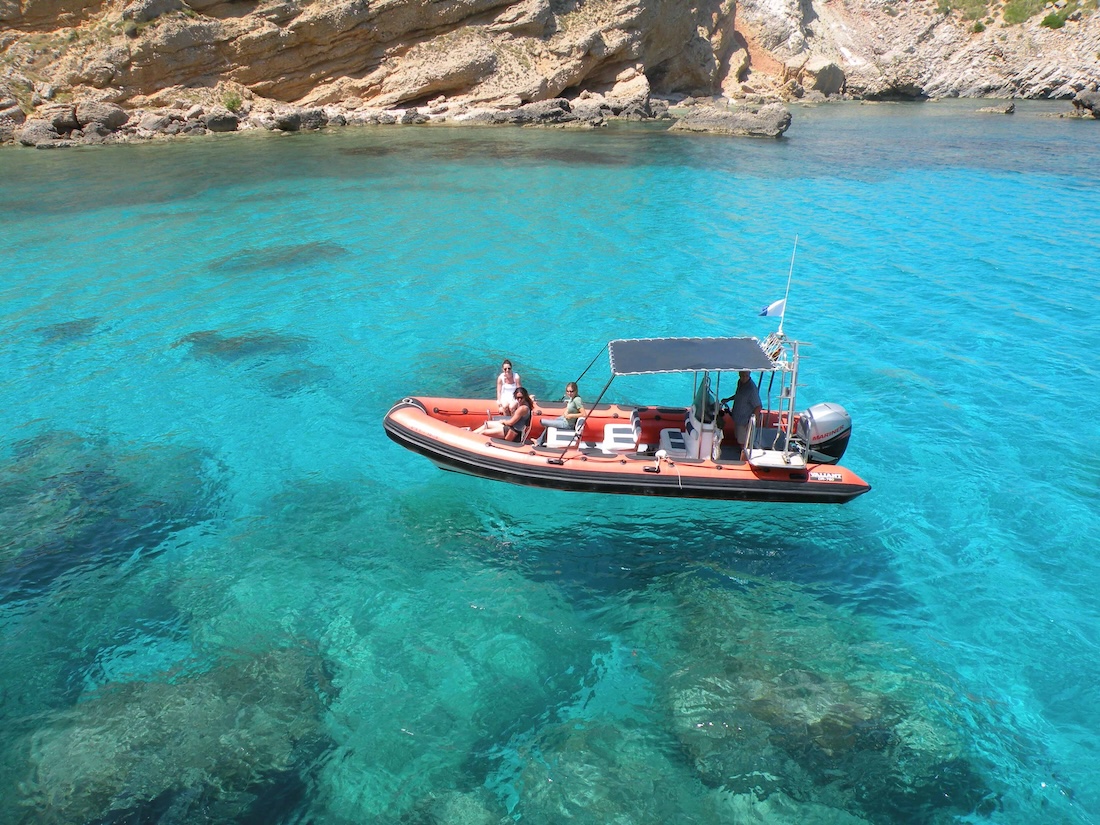 Menorca Northern Beaches & Marine Reserve Speedboat TourCheck availability →
3. Ciutadella and Maó, the two capitals
Menorca has two cities and an old rivalry. Ciutadella, to the west, is the stately one: a Gothic cathedral, golden marès palaces, shady lanes and a postcard harbour for sunset. Maó, to the east, looks out over one of the largest natural harbours in the world, with its British touch — the gin and the sash windows came from here. One to stroll and eat in; the other to sail.
4. Menorca in stone: taulas and navetas
Few places in the world have prehistory so close at hand. The Naveta des Tudons is the oldest standing building in Europe; the taulas — those T-shaped megaliths — exist nowhere else on the planet. This is talayotic Menorca, now a World Heritage Site, and you tour it by car among dry-stone walls. To reach the corners the maps don't show, the off-road vehicle is the way.
 Land Rover Defender Adventure: Menorca's SecretsCheck availability →
 Menorca Signature: Exclusive Land Rover Defender JourneyCheck availability →
5. Menorca on horseback and at sunset
The black Menorcan horse, the one that rears up at the Sant Joan festival, is no postcard folklore: it's part of the island's soul. Riding a stretch of the Camí de Cavalls on its back, between woodland and sea, is one of those things you don't forget. And to close the day, a sailboat or catamaran leaving Fornells as the sun drops over the north coast.
 Sunset Catamaran Tour from FornellsCheck availability →
6. The Menorcan table: gin, cheese and calm
You eat slowly and well here. Mahón-Menorca cheese with its Denomination of Origin, cured in caves; sobrassada, the Fornells lobster stew that costs an arm and is worth it, and Xoriguer gin, drunk with lemonade — the pomada — at the fiestas. A cheese tasting or a visit to an island winery is the way to understand why no one here is in a hurry.
Menorca isn't conquered, it's accompanied. Book the coves by sea and the boat trips ahead in summer, get on a horse at least once, have a lobster stew in Fornells looking out over the harbour, and save one cove for the last day without telling anyone. You'll be back — everyone comes back.