The geology of the north has nothing to do with the south: here the stone is ancient and iron-rich, which is why the sand tends to ochre and red. It's the island's rugged face, with less shade, more wind and a more serious beauty. The coves take a little more reaching, and that's exactly why they keep that remote feel that the south, in August, struggles to offer.
Cala Pregonda, Cavalleria and Cala Tortuga
Cala Pregonda, with its islets and reddish sand, looks like another planet — it's earned on foot and worth every step. Cavalleria is wide and windy, with its iconic lighthouse presiding over the island's northernmost cape. Cala Tortuga and Es Grau, next to the s'Albufera nature park, have shallow waters perfect for calm snorkelling.
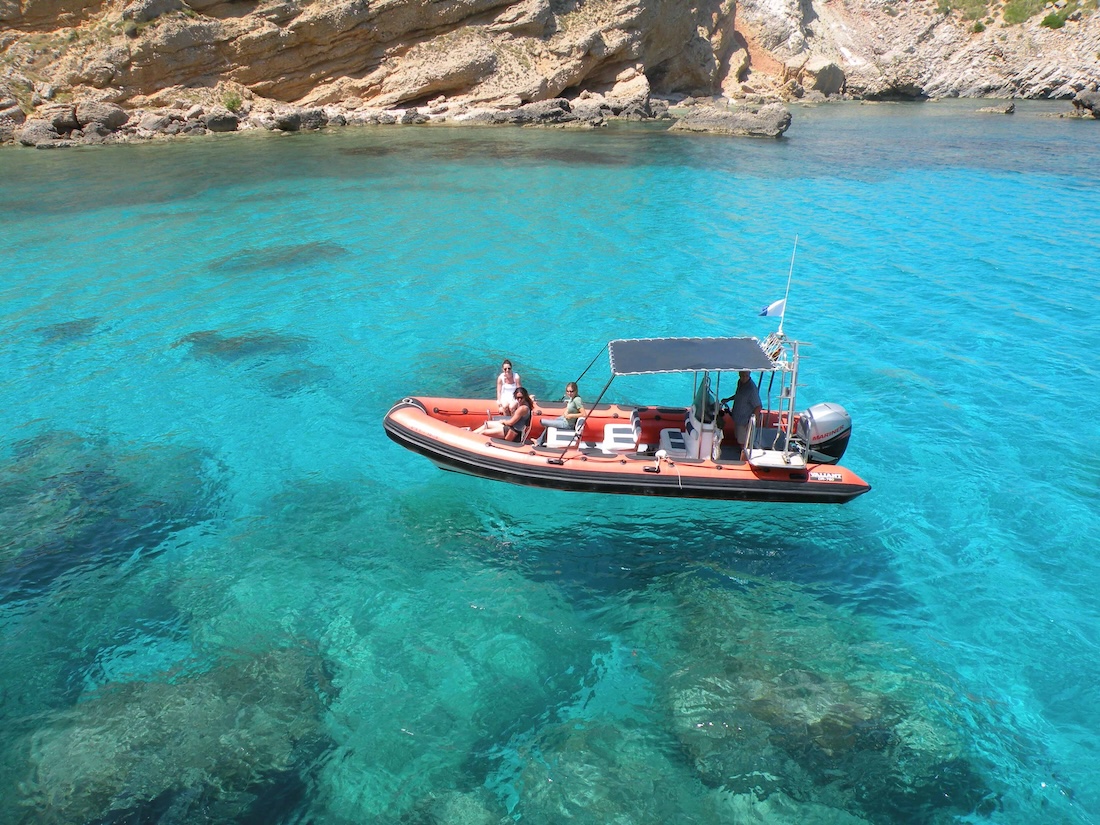 Menorca Northern Beaches & Marine Reserve Speedboat TourCheck availability →
 Speedboat Snorkeling Tour: Menorca's North Marine ReserveCheck availability →
Fornells, the gateway to the north
Fornells is a white fishing village on a long, sheltered bay — a mecca for windsurfing, for lobster stew, and the departure point for almost everything done by sea in the north. From here the boats and speedboats set out that trace this coast, slipping into coves and caves that don't exist by land.
 Kayak Rental in Fornells (Half-Day or Full-Day)Check availability →
The perfect north day: a morning at a wild cove, a lobster-stew lunch in Fornells looking over the harbour, and an afternoon by boat along the coast. The north isn't for lying down for eight hours — it's for moving, looking and breathing deep.